Why Theory Alone Is Not Enough: The Urgent Need for Practical Training in N6 Education
As more N6 graduates are produced, young South African unemployment rates become harsher. After years of hard work, for many, it is nearly impossible to find a job. N6 students are many times expected to graduate without any practical experience, which contributes to this growing problem. Many students become graduates without even seeing the tools related to their future careers. This creates a dangerous gap in the education system.
Employers look for more than having an understanding of job functions. An employee is also expected to use tools correctly and safely; to perform tasks well; and to be able to solve problems on their own. Certificates are no longer sufficient for students to secure employment in the current labour market. Practical experience and theory taught in the classroom are both.
The Increasing Issue of Graduate Unemployment
Each year thousands of young people enrolled in Technical and Vocational Education and Training (TVET) colleges in the hope of a better future. Many study different fields of engineering, business management, human resources, financial management, etc. People have always claimed that education is an important part of being successful, so sacrifices were made in order to obtain degrees. Family members have always claimed that education is an important part of being successful, so sacrifices were made in order to obtain degrees. Certificates, however, do not make jobs.
After completing N6, many graduates find it difficult to obtain internships, apprenticeships, or employment, and for good reason. Most employers demand some form of work experience, exposure, or even practical skills. Related to this, many graduates are unable to meet such requirements, as they are not formally trained in practical environments while studying.
This results in the following cycle:
To get a job, students need experience.
To gain experience, students need a job.
Practical opportunities are lacking, resulting in graduates being unemployed, despite being qualified.
This has now become one of the most frustrating issues for young South Africans.
Why Theory Is Not Enough
Theory is crucial in developing knowledge and understanding. Students must learn safety, principles, systems, and calculations. However, practical skills have the ability to complement knowledge.
For example:
Although an electrical engineering student can draw a wiring diagram, they may be unable to install an electrical system.
Although a mechanical engineering graduate may have an understanding of how engines work, they may be unable to repair machinery without prior exposure.
Although a business management student may have an understanding of management, they may lack the skills to communicate in the workplace.
The ability to learn practically allows students to:
The competency to perform well; the ability to communicate effectively and to work as part of a team; knowledge of what expected of you in an employment situation; development of confidence and problem-solving skills. Become confident and develop the ability to solve problems.
When graduates lack practical learning, they often attend interviews unprepared and without confidence.
The Value of Workplace Learning
Workplace learning is of utmost importance in vocational education. Practical learning allows students to see how the workplace differs from the realm of education. A student who sees a work environment will learn about the operation of that workplace.
Workplaces develop and demonstrate fundamental abilities such as:
- Safe operation of machines/tools.
- Understanding workplace processes and the ability to use them as required;
- Demonstrating good communication skills in the workplace.
- Time management skills.
- The ability to perform well under pressure.
- Knowledge of the role and importance of teamwork and the acceptance of responsibility.
- The ability to solve real life technical problems.
These skills cannot be developed solely by textbook education.
Companies that offer employment are more likely to hire an applicant who has had practical work experience than one who has had no experience, but who has educated themselves by studying theory. One reason for this preference is that practical work experience is likely to have taught the applicant an understanding of the culture of the workplace, whereas theory education is unlikely to have taught this.
Equipment and Resource Shortage in Colleges
A serious challenge that many TVET colleges face is the shortage of good training equipment and resources. Some of the colleges have:
- Machinery that is broken.
- Machinery that is out of date.
- Workshops that are overcrowded.
- A lack of practical sessions.
- A lack of training resources.
Students are sometimes taught by showing diagrams, or by showing a sample, instead of by letting them practice with the equipment. This is an ineffective way to teach and prepare students for the industries that they will be working in.
In certain industries, students will work with advanced machinery after they have graduated. In order to be prepared for that, they should be trained with the same machinery during the educational process.
Emotional Impact on Students
The graduate employment crisis creates a highly competitive job market and a threat to mental health and emotional wellbeing. Some students are becoming
- Stressed.
- Anxious.
- Depressed.
- Have low self-esteem.
- Feel hopeless.
The emotional pain caused by repeated job rejections is a struggle for many graduates who begin to lose faith in the value of the education that they have received because they are unable to find employment.
Education should create routes for graduates to gain employment and achieve a sense of economic independence for themselves and their families.
Suggested collaboration between government, industry and TVET Colleges
To solve the issue of how to provide students with work experience prior to graduating, it is necessary for the government, private sector industries and TVET Colleges to work together to develop partnerships that provide students with the necessary practical skills they require before they can graduate from an institution.
Some key solutions are:
1) Develop more industry-based internships, apprenticeships and learnership programmes.
2) Make practical learning compulsory for all N6 programmes.
3) Develop direct partnerships between TVET Colleges and industry, to provide students with workplacement experience during their studies.
4) Government to provide funding for new training facilities, laboratories or machinery to improve practical learning.
5) Develop mentorship and career guidance for students to assist them in understanding requirements for work place expectations and future progression.
What actions Should Students Take?
Although government and institutions have a responsibility to support students in taking action students also have a responsibility to take action, to develop their own skills. Some important actions are:
- To apply for internships as soon as they are available;
- To volunteer whenever possible;
- To attend workshops and training programmes
- To search online for additional technical or vocational skill development
- To build a professional network of contacts.
- Improving Communications Skills & Computer Skills
Every small practical experience contributes to increased employability.
Importance of Practical Skills for the Economy
The economy of a country relies heavily on having highly skilled and productive workers. Without practical skills, graduates cannot:
Find work because of a lack of suitable candidates.
Be productive in their jobs.
Find employment, leading to increased levels of unemployment.
Provide a contribution to the overall economic growth within their country.
Much of the education of practical skills is the preparation of a workforce that can contribute to various industries such as engineering, construction, manufacturing, information technology and business services.
In South Africa, if graduates leave educational institutions without having gained the right practical skills, the levels of unemployment will continue to rise.
Education Must Prepare Students for Real Jobs
Education should not only be focused on getting students through school and passing a series of exams; the aim of education should be to adequately prepare students for real jobs and achieve real career success. The qualification received by students should be a reflection of both educational knowledge and of the practical ability to perform.
Students should graduate with:
Self-confidence.
Competence.
Skill.
Experience.
Preparedness for a job.
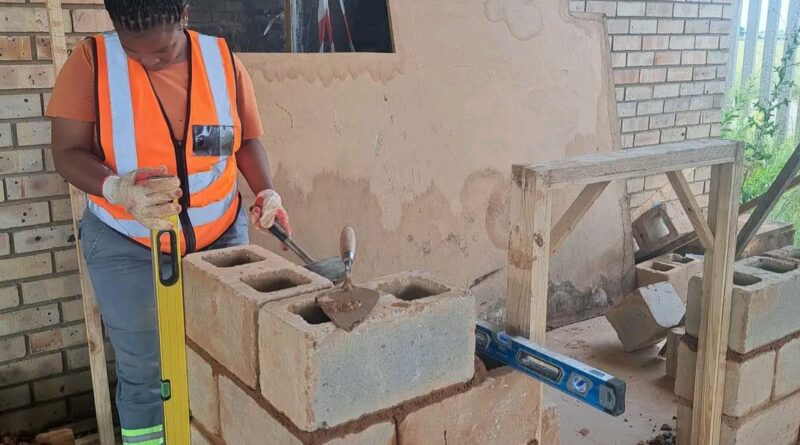
It is expected that no student enrolled in a technical or vocational qualification will complete their programme without having had hands-on experience working with tools and machinery and within a workplace environment.
To conclude, we have assessed the current education system and its focus on theory to the detriment of the development of practical skills via work-integrated learning (WIL). Most N6 graduates have very limited opportunities for employment due to their lack of practical skills even after completing their N6 certificates.
WIL is not optional for N6 graduates, it is a requirement for all students who will graduate from N6. Students need to develop employability skills by completing internships/apprenticeships, gaining work exposure using modern equipment and through hands-on experience.
The future of South Africa’s young people, who are the future of the nation, have the will, the work ethic and the determination to excel in the workforce, but the education system must also provide them with opportunities to build their employability in the years ahead of graduation from N6. No student should graduate from a N6 programme without finding a balance between theoretical and WIL experiences. Therefore, student’s should not be studying for 2-3 years in an N6 programme or more, without having sufficient exposure to WIL opportunities to secure employment.
If South Africa wants to drop the level of unemployment, grow the economy and employ skilled people, WIL must be ingrained into the education system. Developing a balance of theory and practical experience for students who earn an N6 (or similar) qualification will allow a student to apply the knowledge and skills learned in the classroom to real-world applications. The answer to education in South Africa will be accomplished from the combination of theory and practical experiences.
