Why Foreigners Are Often Seen to Gain from South Africa’s Social Grants (SRD, Child Support, Old Age, and Disability Grants) Even Though They Don’t “Pay Taxes”
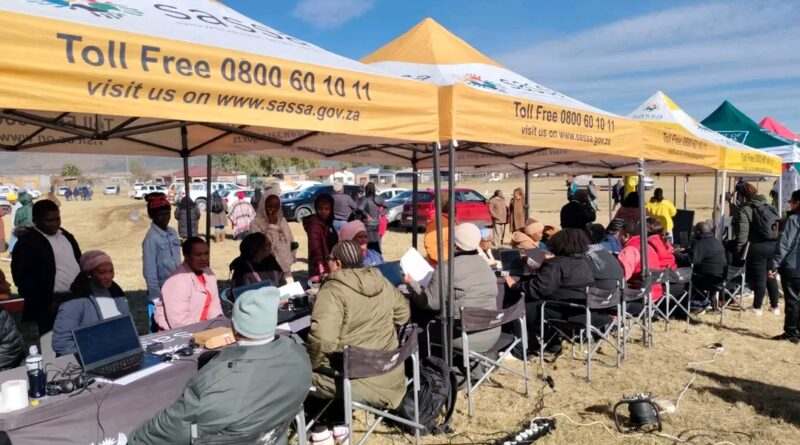
Discussions on South Africa’s social assistance system are characterized by emotional and political views. One contentious issue is who benefits from the taxpayers’ perspective and the fairness of the system. The Social Relief of Distress (SRD) grant, Child Support Grant, Old Age Pension, and Disability Grant are, among other things, used to reduce poverty in the country. These are managed by the South African Social Security Agency (SASSA) that has the legal mandate to make social assistance available to those who meet the stipulated eligibility criteria.
While arguments are sometimes made that, “foreigners get grants for free,” this is, in most cases, an oversimplified statement. In order to fully grasp the statement, one has to go beyond the eligibility criteria and administration; consider the migration patterns and the prevailing socio-economic reality of the country.
Understanding South Africa’s Social Grants System
In Africa, South Africa is one of the countries that has a relatively comprehensive social welfare system, owing to the fact that its social grants seek to reduce extreme poverty, protect vulnerable populations, and provide a basic social safety net.
These grants include:
The Social Relief of Distress Grant, which was created to help unemployed citizens without an income during COVID and has existed in different forms after the pandemic as a temporary relief measure.
The Child Care Grant, which provides support to low-income households caring for children.
The Pension Grant for the elderly, which provides income support to the older population, and
The Disability Grant, which provides support for individuals who are unable to work due to a physical or mental condition after a medical assessment.
These grants are paid from the general revenue of the government, which is mainly collected as income tax, VAT, and corporate taxes. Significantly, the receipt of the grant is not contingent upon the individual personally and actively engaging in tax payment. Rather, it is contingent upon being a legal resident in South Africa, income, and poverty status.
Who is eligible for these Social Grants?
Probably the most misunderstood aspect of the South African social grants system is grant eligibility. Contrary to what more people think, grants are definitely not accessible to anyone entering the country. There are a number of legal and administrative processes which must be complied with to get a grant.
Most grants generally require:
South African citizenship, or
Permanent residency, or
Recognized refugee status (in specific cases), depending on the type of grant and the regulations.
Applicants also have to meet different income level requirements, provide identification, and undergo various administrative checks. For instance, the SRD grant requires that applicants be unemployed and not receiving any other form of income support.
Thus, the system is not meant to be a universal open-access benefit to all foreign nationals. Nonetheless, under certain legal frameworks and based on specific circumstances, some non-citizens who are legally documented and economically vulnerable may qualify. This remains within the bounds of international human rights standards, which indicate that long term residents, as well as refugees, may be entitled to a certain level of socio-economic protection.
Origin of the “Foreigners benefit without paying taxes” Argument
The argument that foreigners benefit from social grants and do not pay taxes in South Africa is a common talk in public debates, particularly when the economy is not performing well, there is high unemployment and poor service delivery.
This argument also tends to combine different issues such as:
Concerns regarding irregular migration
Cases of administrative or documentation fraud that are not related to the subcontinent
Misinterpretation of the tax system
Fierce competition for scarce public resources
In reality, most grant beneficiaries are poverty stricken South African citizens. Where foreign nationals benefit, they are mainly long-term legal residents, or belong to protected categories such as refugees.
In a contemporary market economy, the concept of “paying taxes” does not uniformly indicate any direct relationship to receiving benefits; many individuals will benefit from public services throughout their
lives without making similarly proportionate contributions to tax revenue. This is especially true of children, senior citizens, unemployed individuals, and informal-sector workers.
Tax Contributions and the Principle of Social Solidarity
The most common assumption about individuals who pay taxes is that they have a right to receive public services, and that those who do not pay tax directly in the form of income taxes do not have this same entitlement. The South African tax system is similar to most tax systems; it is based upon the principle of collective financing for collective purposes, and thus funds would be pooled from multiple taxpayers to accomplish collective national goals or purposes such as:
– Healthcare;
– Education;
– Infrastructure;
– Public assistance.
Many people who do not pay taxes directly via income taxes still contribute indirectly through their payments of VAT when purchasing goods and services. In addition, many low-income South Africans receive more in services and/or benefits than they contribute to the tax system, meaning that they are net recipients and that this is the intention of a welfare state.
Thus, the issue is not whether an individual has paid taxes; it is whether or not they qualify legally as well as under the principles of humanitarianism for assistance in accordance with South African laws and federal regulations and policies.
Administrative impediments and issues related to misrepresentation are obstacles to service delivery systems. South Africa’s social grant. South Africa’s social welfare system, like most large-scale welfare systems throughout the world, faces the following problems:
Identity theft
Duplicate claims for benefits
Inadequate verification systems in some municipalities
Corruption in isolated instances,
Challenges in integrating departments of government, i.e., information about clients.
These issues can cause some to believe that there are clients receiving services for whom there is no legitimate basis. While this may occur, it does not mean all clients who receive benefits are unjustly receiving those benefits, as the vast majority of non-citizens get benefits legitimately.
The South African government has put in place greater scrutiny in the verification of benefits (i.e., identifying who is receiving benefits), increased the use of biometrics, and requires cross-referencing of databases as means by which to limit misrepresentation.
Key distinctions must be made between:
Misrepresentation (Illegitimate) claims for benefits by clients that are in violation of the program; and
Legitimate clients that have a vulnerability and may have limited access to social assistance.
Failing to make these distinctions can result in conclusions about entire populations of people that are of little or no value to either the clients or the social assistance system.
Social Protection, Vulnerability, and Migration
The movement of people across international borders is an ever-increasing trend. South Africa is one of the African countries that is often seen as an area for migration due to its relatively robust economy. Refugees or people seeking asylum usually come to South Africa from horrible places.
As per international humanitarian principles per the United Nations Refugee Convention, these individuals should have access to basic social assistance (e.g., welfare) depending on their circumstances and where they are applying for aid.
Economic Pressures and Public Attitudes
The combination of high levels of unemployment, the level of inequality, and escalating living costs in South Africa have created frustration amongst citizens. The perception that resources are scarce frequently results in the public looking towards so-called “foreigners” competing for limited assistance.
When the economy of many countries is under stress, the trend towards being anti-foreigners is a regular occurrence. However, economic studies tends to show that the public’s perception of the amount of benefit fraud perpetrated by foreign nationals is frequently overestimated relative to administrative data.
The overall level of challenge facing social grants, in particular includes many of the following:
1. High levels of unemployment amongst South Africans
2. A large informal economy
3. Fiscal constraints to government budgets and
4. The high levels of inflation and increasing cost of living.
Those factors, listed above, are likely to pose a far greater risk to the sustainability of social grants than the relatively small number of disputed/ fraudulent cases of social grants.
The Function of Social Grants
Essentially, the South African social grant system is not a reward for payment of taxes only, rather, it is intended to be a safeguard to prevent extreme poverty and social unrest.
The objectives of the social grant system are:
1. Reduce child hunger
2. To support the elderly without pensions
3. To assist people with disabilities
4. To provide temporary assistance to unemployed persons
All of these social grant objectives are in line with South Africa’s constitutional commitment to dignity and equality in the post-apartheid era.
Discussion Regarding Reforms to Social Assistance Grants in South Africa
There is presently much public debate in South Africa concerning enhancement of the efficiency of social assistance grants, primarily through increasing their fairness. The principal policy reforms being discussed are:
– Improving identity verification systems.
– Minimising the incidence of fraud and duplication.
– Better coordination of government databases.
– Increasing opportunities for employment as a way of reducing dependency.
– Clarifying eligibility requirements for non-citizens.
Ultimately, strengthening the level of public confidence in the administration of social assistance will depend on the strength of these debates, particularly as they relate to data-based solutions rather than assumptions made on the basis of differences between populations.
While there are many legitimate reasons that the Canadian public fears, or perceives to be a concern, for the improper use of funds made available through the Government of Canada’s Social Assistance Grants program (by individuals who are not eligible for assistance), the appropriate solutions will not involve the creation of a single fix; rather they must be developed through a combination of : improved administration; improved data collection methods; and better enforcement of and a clarification of policies.
It is equally important to distinguish between what is generally perceived to be the improper use of social assistance as a result of fraud from concerns regarding misunderstanding of eligibility to receive assistance, as the responses to both categories will be very different.
Below are a few of the practical steps that can be taken to decrease or eliminate the risk of these issues occurring within social assistance program operations, such as through those of the South African Social Security Agency:
1. Improve Identity Verification Processes
One of the major weaknesses of any large government assistance programs is the existence of identity theft and, as such, the existence of an opportunity for fraud to occur through duplicate identities.
