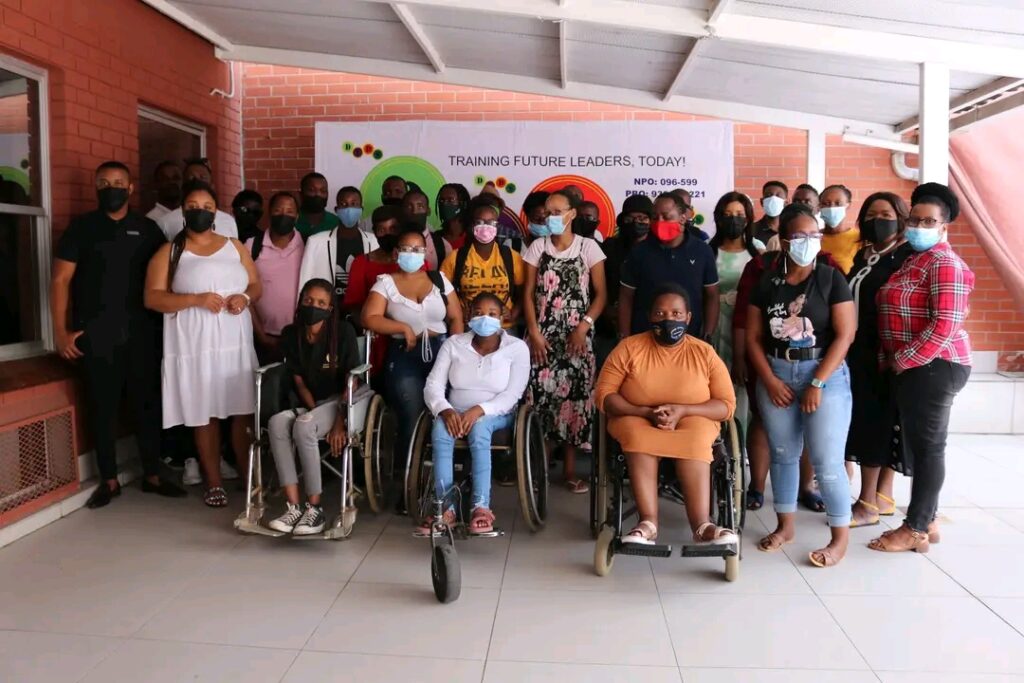
The National Skills Fund is Promoting Disability Inclusion in Skills Development Programmes in South Africa.
The National Skills Fund (NSF) is a crucial development institution for skills development and increased training opportunities in South Africa. It aims to include persons with disabilities in skills development activities and provide opportunities for enhancing their employability as part of one of its priority areas.
Within a few days, South Africa will be celebrating Disability Rights Awareness Month (DRAM) from 3 November to 3 December 2026, and it is important to remind everyone that accessibility, equal opportunities and the inclusion of persons with disabilities in education, training and employment are crucial.
The NSF’s disability-inclusive strategy also emphasizes the importance of eliminating barriers to the access and meaningful participation of people with disability in skills development programs and the economy.
What Is the National Skills Fund?
The National Skills Fund is a public body created by the Skills Development Act 1998. It is under the Department of Higher Education and Training (DHET), and it funds skills development programmes which are aligned to South Africa’s national priorities.
The fund is used for training institutions and organisations to deliver training, education and other skills development opportunities to eligible institutions and organisations. Such institutions can be public education institutions, a training provider, non-profit organisations or other eligible partners.
NSF will not normally fund research projects for individual investigators. Rather it provides financial support to institutions and organisations to carry out approved projects and programmes.
Further details of its work can be found on the official website of the Department of Higher Education and Training.
More information about its work is available on the official Department of Higher Education and Training website.
Being familiar with the Disability Inclusion Target of NSF
One of the essential aspects of disability inclusion is to include persons with disabilities in skills development programs and to give them access to skills development training.
In an NSF disability-related funding document, a minimum of 2% of beneficiaries will be employed or self-employed after education and training within a targeted five-year strategic planning period. This target is not necessarily supposed to be applied universally to all NSF-funded projects, but rather should be understood in the context of those outcomes described in the funding document.
The overall goal is to increase access to education and training, enhance job readiness and promote the inclusion of people with disabilities in the economy.
This is significant as training can help build skills in practice, provide experience in the workplace, and lead to opportunities in various industries.
The original government announcement can be found on the South African Government website.
The need to include people with disabilities in Skills Development.
There are ways in which people with disabilities have different abilities, interests, qualifications and career goals. But for some, there may be barriers to opportunities in the educational institutions, training centres and workplaces.
They can be inaccessible buildings, lack of assistive technology, inappropriate learning materials, limited transport and negative attitude towards disability.
Inclusive skills development can contribute to solving these challenges by making training more accessible and to assessing people on their skills and needs.
A person who is blind or has a visual impairment, for instance, might need materials in a different format (such as digital) or screen-reading software. An individual with a hearing disability can receive sign language interpretation or captioned training videos.
Provision of suitable assistance is important to ensure learners are able to access and demonstrate the skills learnt.
NSF Disability Programme and Training Opportunities
The Department of Higher Education and Training (DHE&T) announced in November 2024 that Phase I of the National Skills Fund Disabilities Programme 2024/25 will begin.
The programme was announced to be funded with R657 million and to assist 10,211 persons with disabilities via individual training programmes, stipends and specialised tools.
The project highlighted the need for support, which reflects training needs of persons with disability.
The notification should not be read as an indication that applications for such programme are on-going. For any training courses interested in, it is advisable to refer to official notification made by the NSF and DHET regarding the programmes, the application requirements and the closing date for applications.
The original government announcement is on the South African Government website.
The potential benefits of skills development for employment prospects.The benefits that skills development can bring to employment opportunities.
Skills development can prepare individuals for employment by providing a combination of theory and work practice. The learner could gain technical skills, digital skills or occupational skills and workplace competencies as a result of the programme.
Individuals with disabilities can find training and employment opportunities in a variety of occupations, such as information technology, administration, business services, entrepreneurship and other employment options to match their interests and abilities, through accessible training.
The benefits can extend beyond finding employment. Training can also build participants’ confidence, give them some skills and knowledge to help them in certain activities and in the self-employment market.
However, having been through a training programme doesn’t ensure employment. Access to vacancies, qualifications, experience, labour market conditions and ease of access to recruitment processes also influence employment outcomes.
Training providers and employers can help by providing meaningful links between learning and work and employment.
What can Training Providers and Employers do?
The practical steps outlined below can be taken by organisations that provide funded skills development programmes to enhance disability inclusion.
1.Ensure training facilities are available.
Training locations need to take into account the needs of individuals with mobility, visual, hearing and other impaired disabilities. Facilities are made accessible to enable participation in classes and practical activities for participants.
2. Give appropriate teaching aids
Materials, videos, assessments and other learning resources should be delivered in formats that participants can use, particularly in digital format. This could be provided in a large print format, as a captioned document, screen-reader accessible documents or sign language interpretation depending on individual needs.
3. Talk to people with disabilities
Individuals with disabilities are entitled to have the chance to describe their disability support. Engaging participants is an excellent way for training providers to learn what is getting in the way and how to create a strategy that works.
4. Provide equitable recruitment and evaluation practices
The criteria for a programme should be used to evaluate the applicant. Providers should think about making reasonable adjustments which may be necessary to allow the learner to participate in the training without it impacting on the essential learning outcomes.
5. Link training with employment opportunities
Training providers can liaise with employers to determine the skills gaps and organise suitable workplace exposure and prepare a participant for job applications.
These measures can help to make inclusion more meaningful than counting the number of children and young people with disabilities participating.
Disability Rights Awareness Month 2026
National Disability Rights Awareness Month is every year between 3 November and 3 December in South Africa. The time is to spread awareness of disability rights and inspire concrete steps to take away any barriers to participation.
The campaign is pertinent to schools, colleges, universities, government institutions and organisations, employers in the skills-based industry.
This is not the end of the awareness programme: disability inclusion should not be confined to one month of activities. Accessible education, fair recruitment and appropriate workplace support is a year-round concern.
This can be a time for organisations to look at their training policy, involve people with disabilities and work out some simple changes that would work in their facilities and programmes.
Official information on the South African Government’s Disability Rights Awareness Month page is available about the annual campaign.
Official information about the annual campaign is available on the South African Government’s Disability Rights Awareness Month page.
Where can people get information about the NSF Programmes?
Those seeking skills development opportunities should refer to official announcements made by the DHE/T and the National Skills Fund.
Applicants are advised to check the following information prior to applying for a programme:
The name of the training programme and the organisation delivering the training.
The eligibility criteria and required qualifications.
If the programme has any specific provision for persons with disabilities.
How to apply and the date of closing for applications.
Including stipends/assistive tools or other types of support.
The training will take place where, when and what it will produce.
Applicants would also be advised to ascertain if applications are open before providing personal information. They should rely on the official channels of application, and they need to be wary of anyone asking for a fee to ensure their acceptance into the institution or job.
Individuals should not take it for granted that all NSF funded programmes accept applications directly from the fund.
Conclusion
The inclusion of disability in the focus of the National Skills Fund demonstrates the significance of increasing access to education, training and job opportunities in South Africa.
Funding can support more persons with disabilities be included in the economy by creating learning opportunities in accessible environments, providing the right training materials and bridging the gap between skills training and jobs.
Discussions of Disability Rights Awareness Month 2026 must continue to emphasize action, equal access and opportunity to meet the needs and abilities of individual learners.
It is most meaningful when people have the opportunity to develop their skills, are able to do so with the right support, and then are able to apply their skills to study further, work or self-employment.
